
Most of the pics on this page are scanned from 35mm negatives and slides, many of them 40 years old or more.
My first-ever night in Mana Pools was spent in the old fort at Nyamepi, in 1978, when life and movement there was very constrained by circumstances:
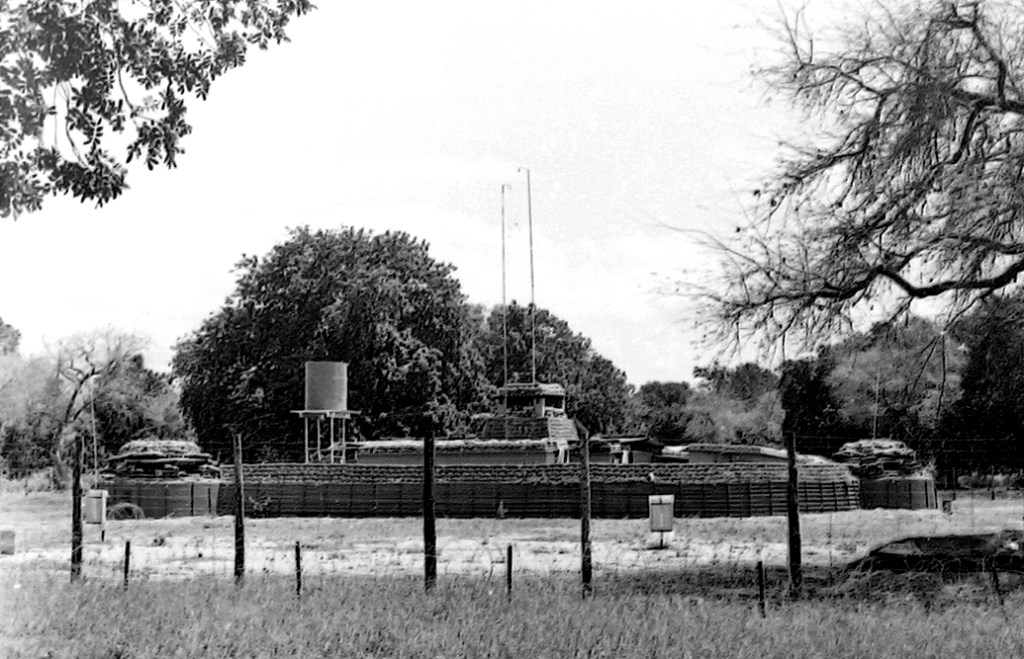
All the same, we managed to get around quite a bit during the three weeks I stayed there. Here’s one of my very first photos of Mana, taken during that introductory stay. I don’t think the general view today is all that different, but it does look as if riverbank erosion was well under way then:
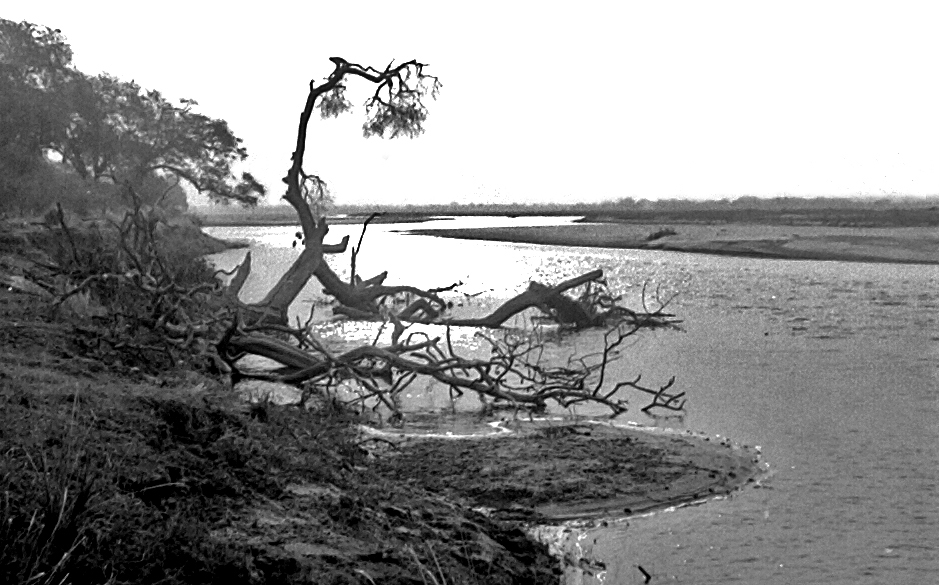
By way of contrast, I spent my first-ever night on the Matusadona mainland alone in the old tree-house in the Nyamuni River:
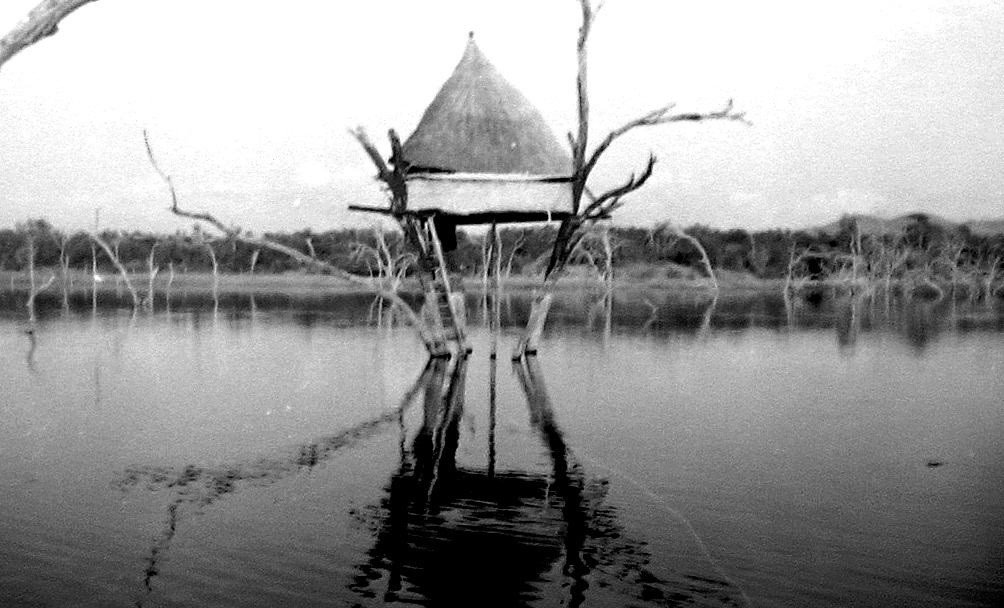
Each of these experiences catalysed its own revelation: the Mana fort, that of the sheer dedication of Parks staff to the cause they served; the Matusadona treehouse, to the insignificance of man in the face of natural forces, when a thunderstorm and gale force winds struck at 2a.m. Lake Kariba was full in 1980, when I took the two photos below, somewhere on the north shore of Matusadona’s Palm Bay:
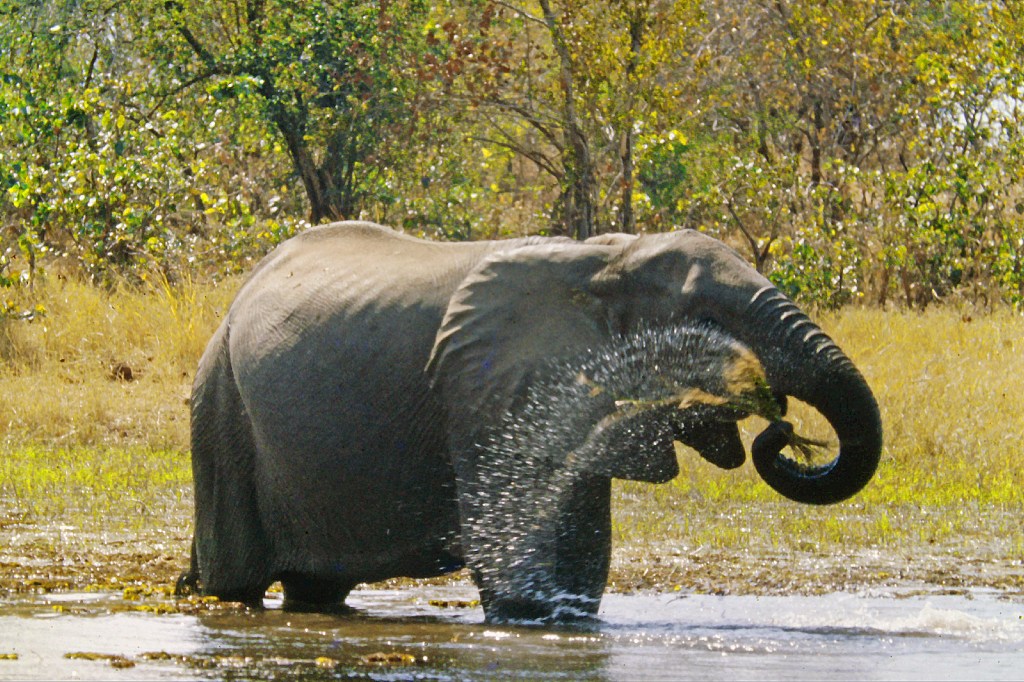
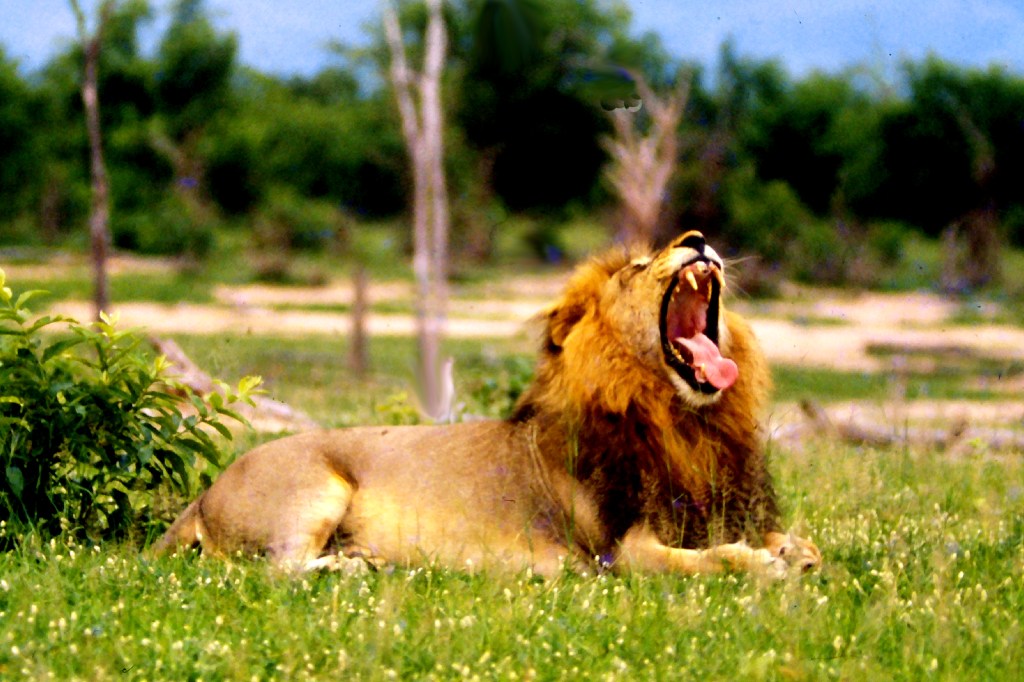
Here’s a Matusadona lion, from the early 1980’s on what appears to be a Fuji film of some kind. Whatever it was, it has survived pretty well, needing only a few “clone stamps” to get rid of some irritating blue blobs:
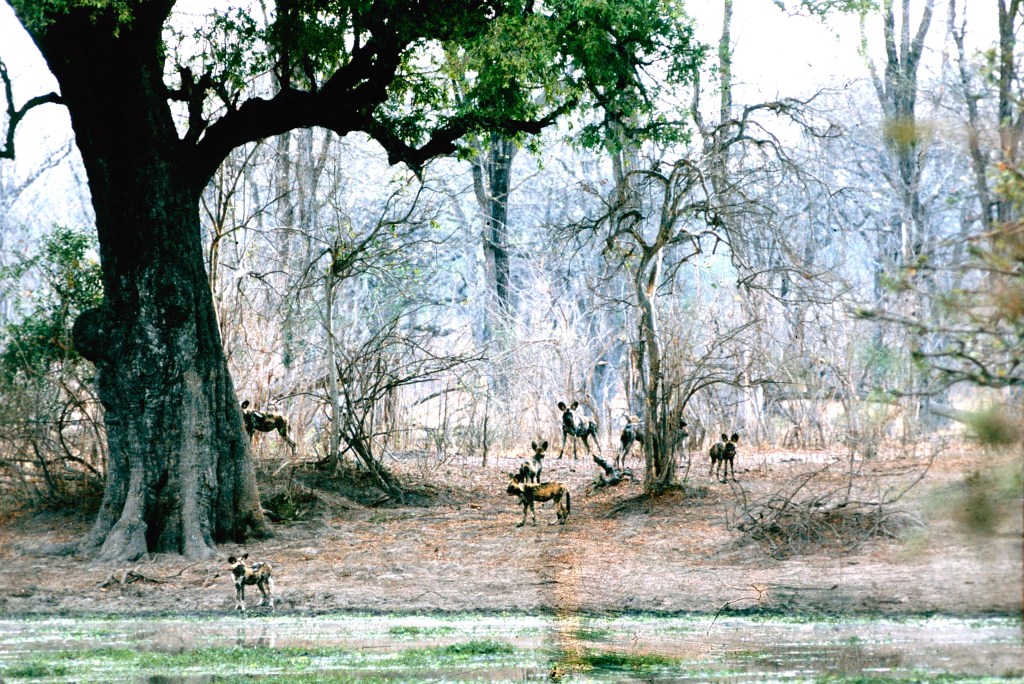
This slide – of wild dog, painted wolves, whatever your preferred terminology – hasn’t survived quite as well as most, but was taken at Mana’s Sapi No. 1 pan in 1979:
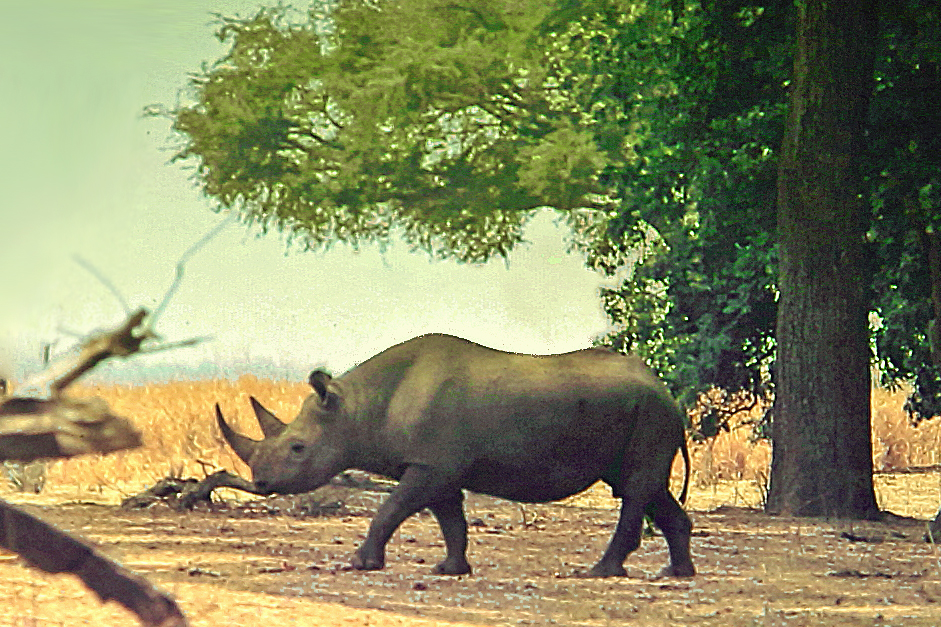
And, of course, we come back to the tragic story of the black rhinoceros, which was relatively common in both Matusadona and Mana Pools until the horn poaching – which had already annihilated populations further north – reached us. This guy’s territory was the Mcheni area of Mana, and I spent many fascinating days following him around on his meanderings. As I recall, he died in 1982 – but from anthrax, not at the hands of poachers:
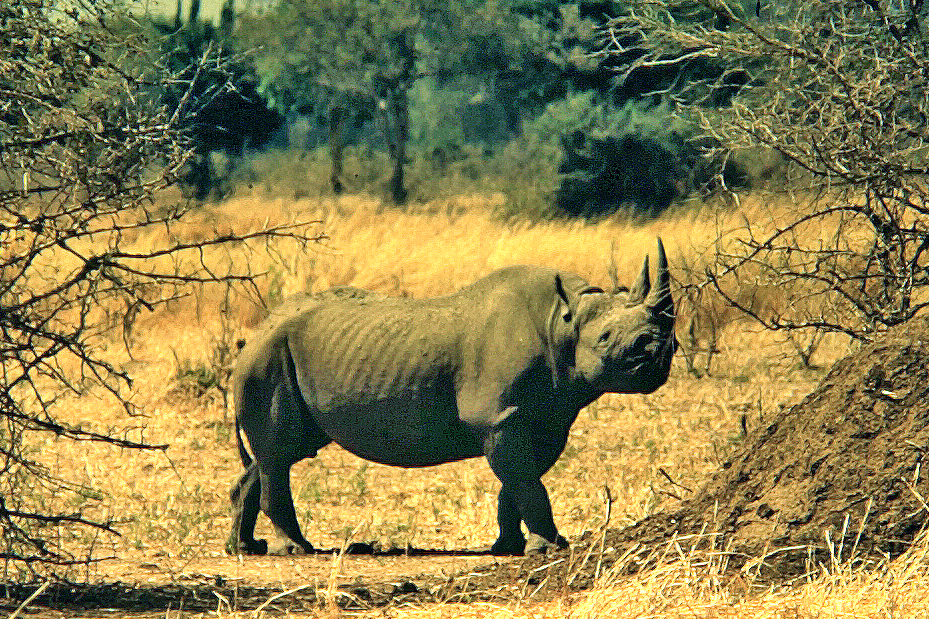
Here he is again, heading to the Zambezi to drink:
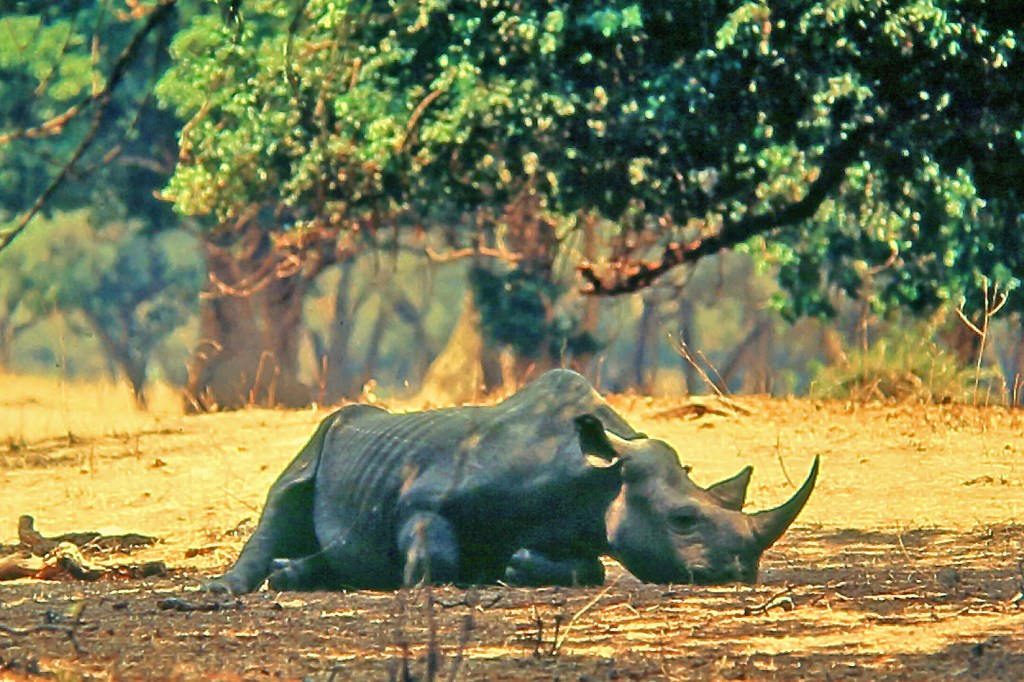
He always took a nap in the heat of the day, usually under one of the lovely mahoganies near today’s Mcheni camps. I came to think of him as a kind of rhinocerine Rip van Winkle – while he slept, the crackling of dead twigs and leaves underfoot caused nothing more than a twitch of the ears; and when he woke up, he’d look around for a minute or two in a bemused, where-the-heck-am-I sort of manner before struggling wearily to his feet and meandering off to browse again:
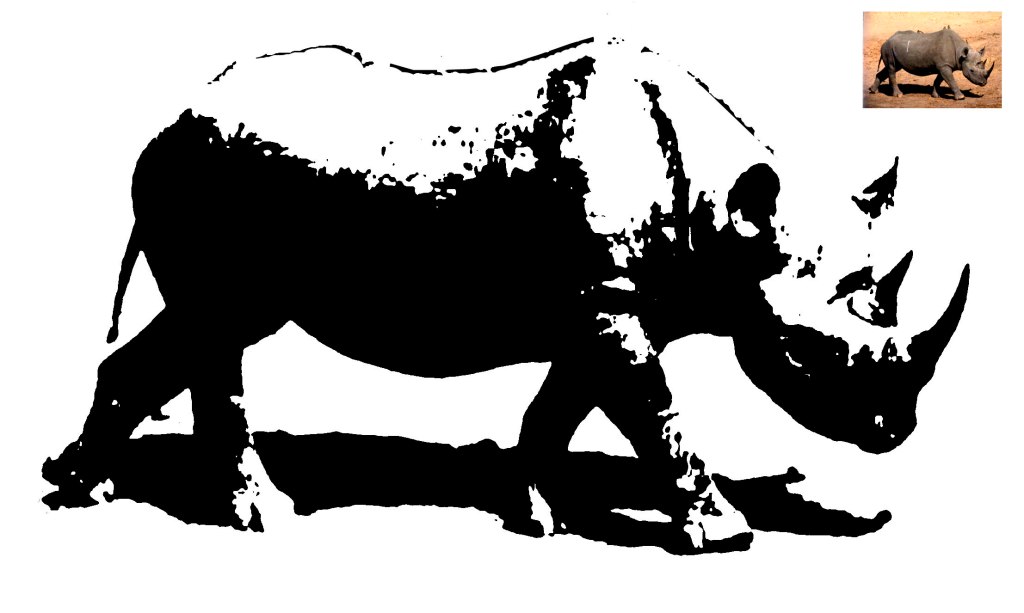
Another Mana rhino, photographed at Chine Pool, back in the day. Converted in Photoshop from slide to greyscale mode, background deleted, threshhold adjusted, and a great deal of tidying up. No pictorial context, I know, but it’s sat unused in my collection for years and this is a good excuse to use it:
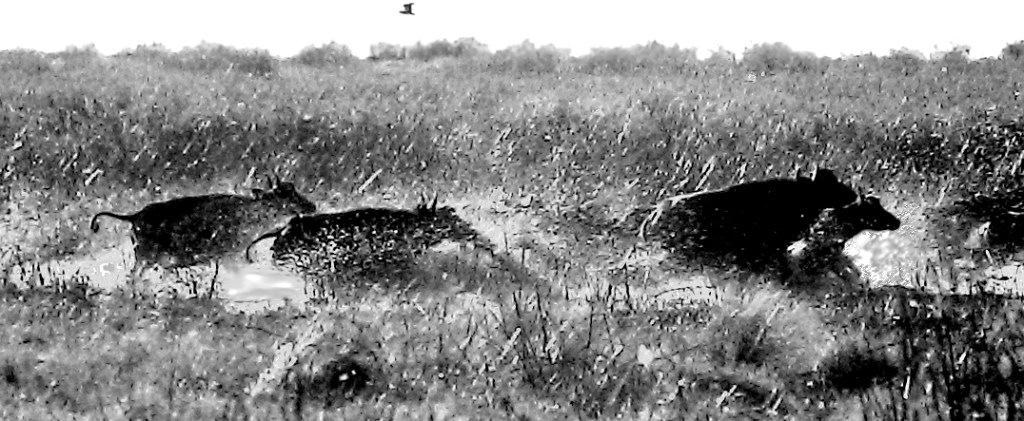
Back in Matusadona and shot in black & white this time, here’s a group of buffalo – which I’d accidentally disturbed – at full escape velocity across an area of semi-flooded foreshore grassland. This was in 1978 or 79, and I can’t recall the actual time of year, but it certainly looks very different to the scene today:
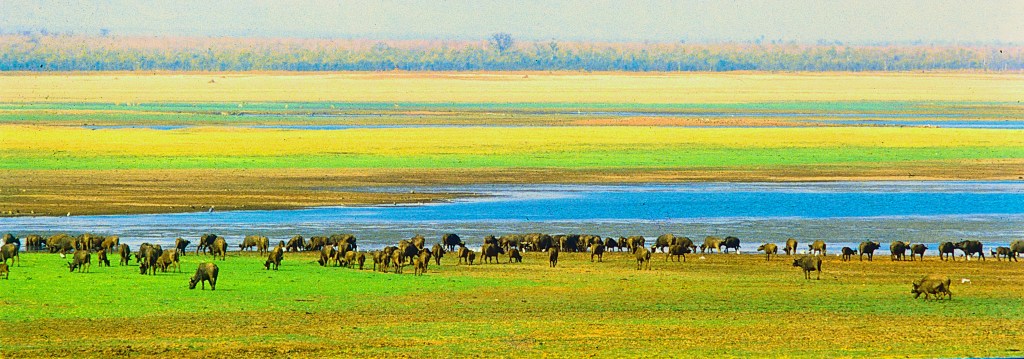
Here’s a scan of a slide I took of the Kemurara area sometime in the 1980’s, during the “buffalo explosion” that took place after lake levels fell dramatically and the Panicum grasslands had developed:
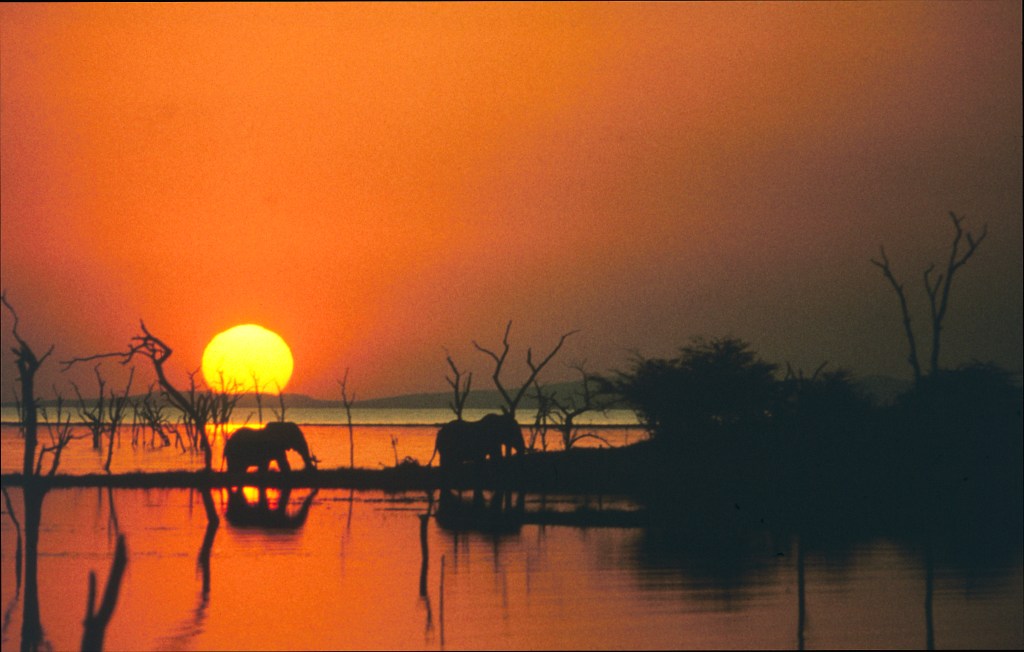
Here’s one from even further back – 1979, if memory serves me correctly, and taken somewhere in the gap between Fothergill Island and the Matusadona mainland.
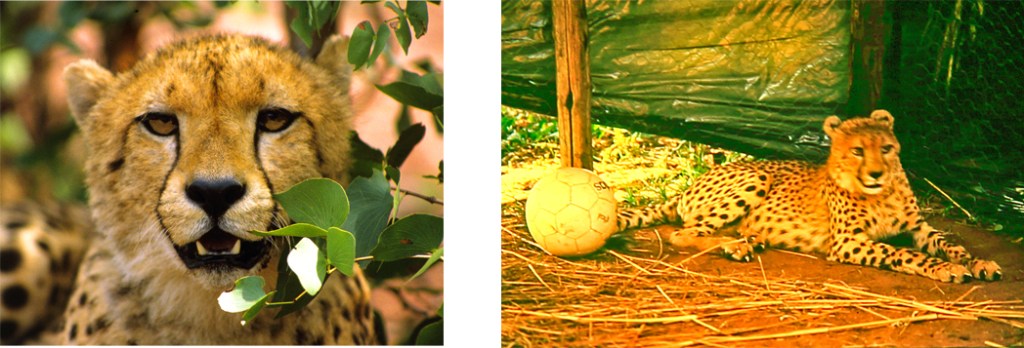
Finally: the experimental reintroduction of 18 cheetah to the Matusadona National Park in 1993, from other parts of Zimbabwe where they were being shot as cattle-raiders. (Photos: scanned transparencies of captive cheetah in the Fothergill boma prior to their release into the Park).
 zambezipics.org